
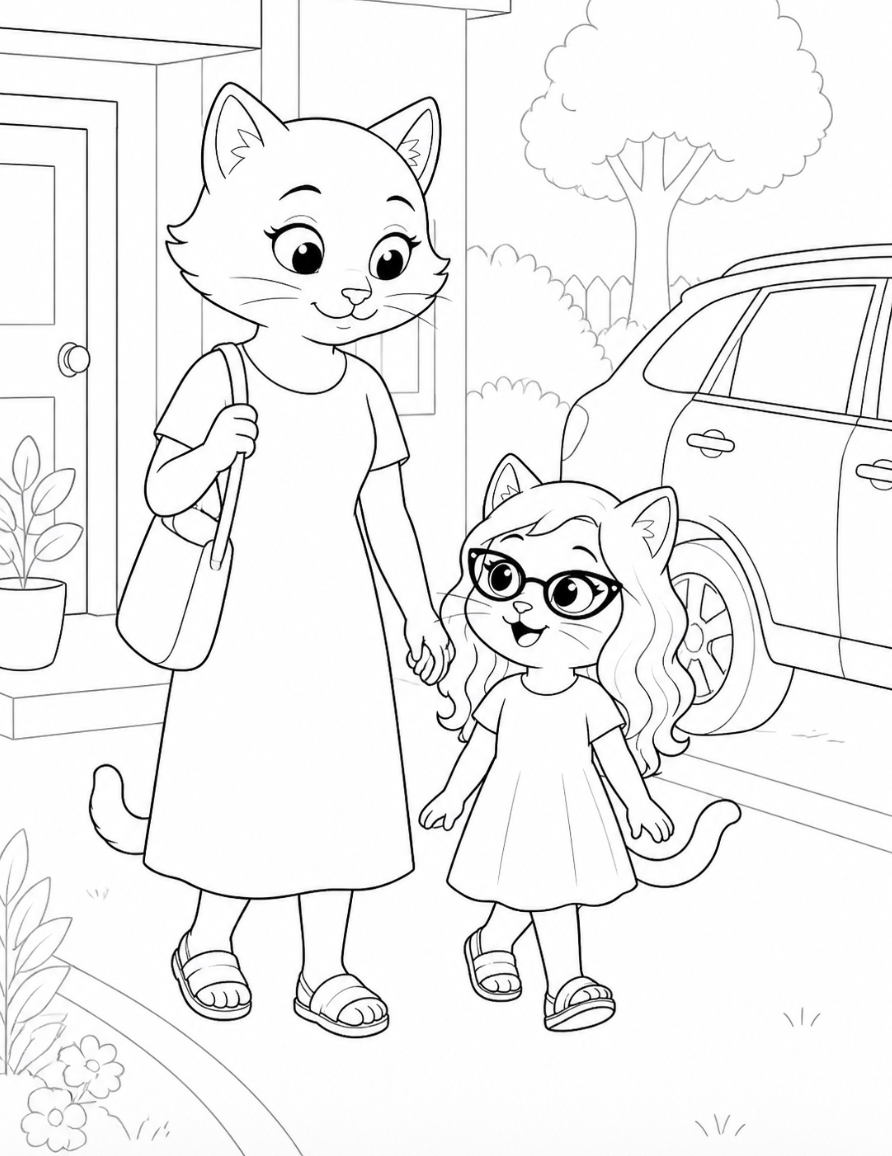
Some family traditions begin with a big occasion. Others begin with a handful of crayons and someone saying, “Want to sit with me?” Coloring can be one of those small invitations: a familiar thing to do together, without needing to plan an entire afternoon.
The aim is simply to make a little room for each other. Some days that might mean ten quiet minutes. Other days there will be stories, laughter, or a child who decides that the purple crayon is actually a spaceship.
Choose a moment you already have
Think about a part of the week that has a little breathing room. It might be after breakfast on Saturday, while dinner finishes cooking, or on a slow afternoon when everyone needs a change of pace.
Try attaching coloring to that familiar moment rather than adding another appointment to the calendar. Start with once a week if that feels manageable. A ritual can be something you return to without being something you must do every day.
Keep the invitation easy to say yes to
Make a small basket with a few coloring pages, blank paper, and age-appropriate crayons. Include something for the grown-up too. Being able to bring everything to the table at once makes starting easier—and gives supplies a clear place to go afterward.
Offer two pages rather than a whole stack if choosing becomes the activity. Or let your child use blank paper while you color. Sitting together matters more than working on matching pictures.
Try this ten-minute rhythm
- Settle in: choose a page and a few colors together.
- Make something: color, doodle, or tell a story about the picture.
- Notice one detail: invite each person to share something they enjoyed making.
- Put it away: save unfinished pages in a folder for next time.
Use this as a gentle starting point. Stop earlier or stay longer depending on how everyone feels.
Let the conversation follow the picture
You don’t need a list of important questions. Sometimes a picture gives you all the opening you need: “Where do you think they’re going?” or “What would this animal order for lunch?”
- What should we name this character?
- What happens just outside the picture?
- If this house belonged to you, what would be inside?
- Which part would you like to color next?
Leave room for silence, too. A child can enjoy your company without wanting to explain every mark. If they do share a story, listen without needing to steer it toward a lesson.
Make room for their way of creating
A sky can be orange. A face can have rainbow stripes. A page can stay mostly blank. Try noticing a choice—“You used lots of little blue dots”—rather than correcting the picture or suggesting the next color.
With siblings of different ages, offer different pages or materials and let everyone work at their own pace. If a younger child leaves after a few minutes, the rest of the family can continue. There’s no need to make finishing the price of participating.
Let it be easy to return to
Keep a few favorites in a folder, write the date on the back, or display one page at a time. Ask your child which piece they’d like to save. The rest can simply have been part of a good afternoon.
And if you miss a week, pick it up again when you can. The most useful tradition is one that fits your family as it is: a little paper, a little color, and a place beside someone who wants to spend time with you.